

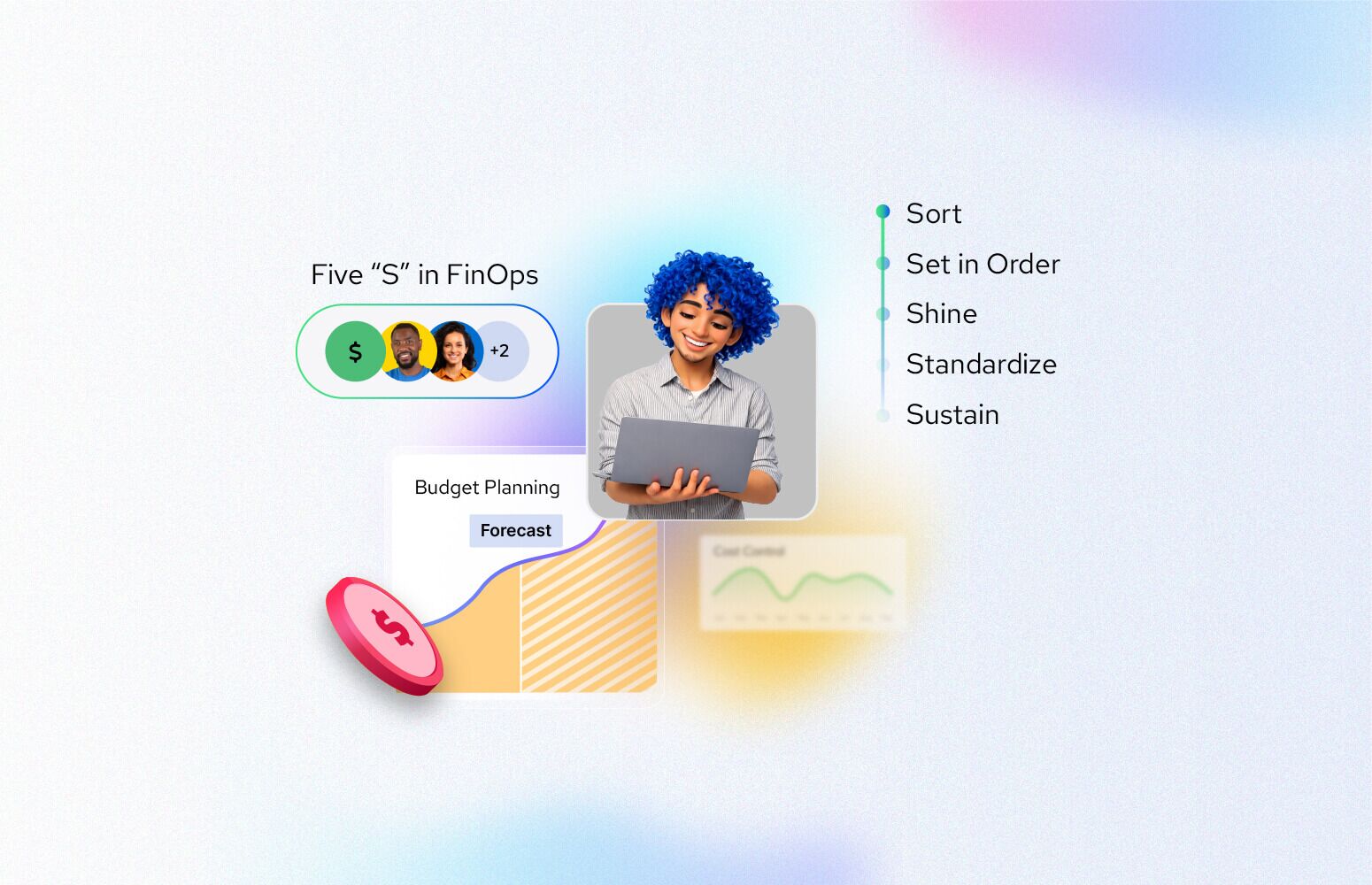
What is 5s?
5S is a five step, Japanese-derived methodology designed to create an organized, clean, and safe workplace while reducing waste and improving efficiency.
The English steps are
- Sort
- Set in Order
- Shine
- Standardize
- Sustain
The model is widely used as a foundation for Lean management practices.
Why 5s?
The 5S methodology is essential for building an organized, efficient, and safe work environment. It increases productivity by reducing waste, improves quality by identifying defects early, enhances employee safety, and boosts overall morale. In short, 5S helps teams work smarter, faster, and more effectively.
If we translate this to Azure, Azure functions as a “Digital Workplace” where organizations run their primary workloads to support their business. Just like factories implement 5S to improve quality and productivity, we must apply the same mindset in the Azure cloud.
To maintain a well managed Azure environment, we need to:
- Keep subscriptions and resource groups organized
- Remove unattached disks, unattached IP addresses, and unused resources
- Keep the environment clean and clutter free
- Monitor resources cost at regular intervals
- Rightsize VMs to avoid overutilization or underutilization
- Implement automation for reporting, alerts, and compliance
Using Turbo360, I aligned my cloud cleanup and FinOps activities with the five 5S principles:
- Sort – Remove Cloud Waste
- Set in Order – Organize Cloud Resources
- Shine – Continuous Optimization
- Standardize – Define Rules & Alerts
- Sustain – Maintain Cloud Consistency Through Reporting
By applying these principles consistently, I started seeing real improvements in cloud visibility, cost optimization, and overall hygiene.
Sort – Remove cloud waste
Cloud Disorder: Cloud environments easily collect unnecessary clutter. Unattached disks, idle VMs, unused IPs, old snapshots, and test resources that nobody remembers. These accumulate silently, drive up monthly bills, and make it harder to maintain clarity and control. Over time, this creates avoidable noise in the environment and makes everyday operations less efficient. Without periodic cleanup, costs rise quietly and teams lose visibility into what truly matters.
Cloud Discipline: Turbo360 made the “Sort” step incredibly easy by automatically identifying unused and orphaned resources across my subscriptions. It not only flagged what was safe to remove but also showed how much cost could be saved by cleaning them up. This allowed me to quickly eliminate waste and move toward a lean, cost-efficient cloud setup. For me, this became a smooth, consistent way to apply the 5S principle of Sort in Azure.

Set in Order – Organize cloud resources
Cloud Disorder: From my experience, mature organizations in Azure often struggle to manage multiple subscriptions created for Landing Zones, projects, departments, and various use cases. While the multi-subscription model is excellent for scaling, the real challenge is keeping everything organized across one or more tenants. Azure doesn’t provide a single unified view to visually arrange or group subscriptions, and as a result, teams end up relying heavily on manual structures like Management Groups, Subscriptions, Resource Groups, and Tags. This takes ongoing effort and makes it difficult to maintain a clean, well organized cloud environment.
Cloud Discipline: Turbo360 helped me overcome this challenge by giving me a unified, organized single view dashboard for all my subscriptions in one place. I was able to easily group subscriptions, resource groups, and tags into meaningful folders through an intuitive tree view. Even better, Turbo360 allowed me to fix and apply tags to existing resources using automated rules, which saved a lot of manual effort. This made it much easier for me to “Set in Order” my cloud environment in a structured, scalable way fully aligned with the 5S principle.

Shine – Continuous optimization
Cloud Disorder: Cloud teams often believe optimization ends after applying Reserved Instances (RI) and Savings Plans. They see some improvement on the cost management dashboard and feel satisfied. But many organizations miss monitoring their RI and Savings Plan usage regularly both of which represent a significant portion of cloud spend. Even after purchasing RI or Savings Plans, there is still room for optimization by identifying commitments that are underutilized, unused, or no longer relevant to actual workload consumption.
Cloud Discipline: With Turbo360’s Advanced Recommendations, I was finally able to keep track of all my Reserved Instances (RIs) and Savings Plans in one place. This helped me identify optimization opportunities even after purchasing RI or SP commitments. Turbo360 clearly shows which commitments are underutilized, unused, or no longer matching my actual workload patterns, allowing me to take corrective action and avoid silent cost leakage.

I also leveraged Turbo360’s Right Sizing capability, which continuously monitors running VMs and recommends the optimal size for each one including exact cost savings. This made it easy to adjust compute resources without guesswork.

Turbo360 also helped me identify which VMs were using Azure Hybrid Benefit (AHB) and which were not. This visibility made it easy to enable AHB where it was applicable under Microsoft’s compliance guidelines, resulting in additional cost savings.

Overall, Turbo360 made the “Shine” step a continuous and effortless activity, keeping my cloud optimized on a regular basis.
Standardize – Define rules & alerts
Cloud Disorder: After achieving Sort, Set in Order, and Shine, the next crucial step is to supervise and maintain these three principles. Even if everything is configured correctly, continuous oversight is necessary to avoid unexpected issues.
One limitation seen in Azure Cost Management is that many users rely only on Budgets with email notifications. The problem is that budgets are reactive they alert you only after the threshold has already been crossed. This often leads to delayed action and fails to prevent real-time anomalies, such as when someone accidentally creates a database outside the SQL Elastic Pool, resulting in unnecessary charges for both the Elastic Pool and the standalone vCore.
Cloud Discipline: With Turbo360, we stay proactive instead of reacting after costs increase. It helps us monitor budgets with accurate forecasts and even lets us include upcoming workloads from our project pipeline. When we add these future workloads, Turbo360 clearly shows their impact on the minimum and maximum forecast, making it easy to understand the expected cost trend once the new project goes live.
Another advantage is that it continuously tracks our Azure run rates and detects any cost anomalies in real time. If something unusual happens like a sudden cost spike or an unexpected resource deployment it immediately sends incident alerts identifying the exact resource causing the increase. Notifications can be delivered through Email, Teams, Slack, and more than 10 other supported channels.

By standardizing alerts, forecasts, and monitoring rules in one place, Turbo360 helps me consistently supervise my cloud environment making it much easier to stay aligned with the Standardize principle in 5S.
Sustain – Maintain cloud consistency through reporting
Cloud Disorder: Finally, even after applying Sort, Set in Order, Shine, and Standardize, decision making still depends on the management or leadership team. To keep everything running smoothly, leadership needs clear, accurate, and timely insights but convincing them using Azure’s default spreadsheets is nearly impossible. We often spend hours preparing cost summaries, potential savings reports, or resource overview reports, and producing these on the fly is not easy.
Cloud Discipline: This is where Turbo360 helps me sustain the 5S practice. It automatically generates executive ready reports such as Cost Summary, Savings Opportunities, and Resource Inventory, making it effortless to present insights to leadership. With consistent and reliable reports, maintaining cloud governance and financial discipline becomes much easier completing the 5S cycle with Sustain.

Conclusion
To cure the cloud disorder, I was struggling with and to maintain long term cloud discipline, I applied the 5S mindset using Turbo360. This combination gave me clarity in resource organization, confidence in cost governance, and consistency in daily operations. Turbo360 didn’t just help me fix issues. It helped me build a disciplined cloud environment that stays clean, optimized, and well managed over time.
For me, this approach turned cloud chaos into cloud control, and it’s now a practical method I rely on to keep my Azure environment healthy.


