
In every digital business, integrations form the nervous system. They connect apps, partners, and data so that orders, invoices, and customer updates flow smoothly through the organization.
But what happens when one of those transactions fails? What if an invoice disappears between systems or an API doesn’t trigger a downstream process? Suddenly, visibility becomes the difference between a fast recovery and a business outage.
That’s why every integration platform from the smallest automation to the largest enterprise iPaaS needs Business Activity Monitoring (BAM).
It’s not just about tracking system health; it’s about giving the business confidence that every transaction can be seen, understood, and acted upon.
Integration has changed – but visibility hasn’t kept up
Most organizations have embraced cloud-based integration using:
- Azure Logic Apps for workflow automation
- API Management for partner and app integrations
- Azure Functions for serverless logic
- Data Factory for data movement and orchestration
Each of these tools brings agility and scalability but they also fragment visibility. Transactions span multiple services, subscriptions, and regions.
Without a unified view, answering a simple business question like: Did all our orders from Shopify reach our ERP today? can involve hours of searching through logs and dashboards. The problem isn’t the technology, it’s the lack of business-level observability.
What BAM really means
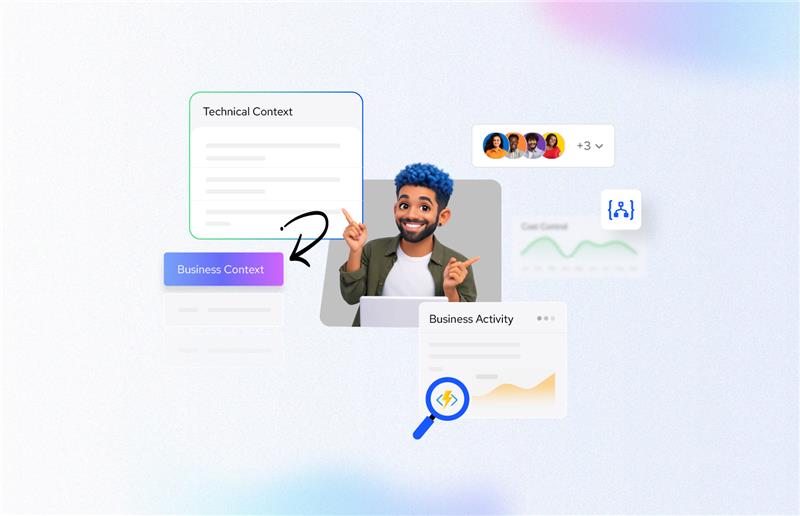
Business Activity Monitoring isn’t just “another logging layer.” It’s a structured approach to tracking the business meaning behind technical events.
| Concept | Description | Example |
| Business Milestones | Key points that matter to the business process | Order Received, Payment Authorized, Invoice Sent |
| Business Data | Identifiers and metadata that make sense to users | Order ID, Customer Name, Invoice No |
| Correlation | Linking technical processes to the same business transaction | API → Logic App → Function → Data Factory |
| User Access | Enabling business users and support teams to search and view transactions | “Show me all orders delayed today” |
When your integration platform supports BAM, every stakeholder can see not just what happened, but why.
The cost of not having BAM
Without BAM, organizations experience a silent but significant productivity drain:
- Increased support load – IT teams handle endless “where is my data?” questions.
- Reactive problem-solving – Issues are discovered by users, not monitoring tools.
- Poor customer experience – Delays and missed SLAs go unnoticed until it’s too late.
- Limited accountability – It’s hard to prove compliance when you can’t show transaction traceability.
- Slow business decisions – Lack of visibility makes it impossible to measure process performance.
Over time, these inefficiencies lead to loss of trust between business and IT teams and that’s far more expensive than any tool license.
Turbo360: BAM for the modern Azure Integration Platform
Turbo360 Business Activity Monitoring was designed to bring BizTalk-style visibility into the cloud-native world without the heavy infrastructure or complexity.
Here’s how it adds value to Azure Integration Services:
| Turbo360 BAM Capability | Business Value |
| Unified Business View | Correlates transactions across Logic Apps, Functions, and APIs so you can see the complete journey. |
| Business Data Search | Search by Order ID or Invoice Number – not by run IDs or correlation GUIDs. |
| Visual Tracking & Dashboards | Intuitive, no-code dashboards for business and operations teams. |
| Error Root Cause Analysis | Quickly identify where and why a transaction failed. |
| Role-Based Access | Empower business and support teams while keeping governance intact. |
Turbo360 helps organizations achieve the holy grail of integration visibility – a single pane of glass for business transactions.
Integration platforms are evolving – BAM is the missing layer
Think of your integration architecture as three layers:
- Connectivity – APIs, connectors, and messages moving between systems.
- Automation – Logic Apps, Functions, and workflows that transform and route data.
- Visibility – The business view of what’s actually happening.
Most architectures stop at layer two. But without layer three, you’re effectively running blind. BAM completes the architecture, it gives you the context and control needed to operate integrations like a business service, not just a set of workflows.
For system integrators and MSPs: A new opportunity
For System Integrator (SI) and Managed Service Provider (MSP) partners, offering BAM isn’t just good practice, it’s a differentiator. You can:
- Deliver solutions that are observable from day one.
- Offer BAM as a Service to customers for ongoing visibility.
- Reduce support overhead by enabling customer self-service.
- Build trust and transparency that lead to long-term relationships.
Turbo360 allows partners to deliver operational excellence alongside technical integration – positioning you as a strategic advisor, not just an implementer.
The future of integration: From monitoring to insight
BAM is becoming more intelligent. The next evolution involves predictive analytics, AI-driven anomaly detection, and business-level SLAs that measure not just uptime, but outcome.
In this future, business teams won’t just ask, Did it work? They’ll ask, How is it performing, and how can we improve it?
Turbo360 is already enabling that shift by combining deep integration visibility with business context and actionable insight.
Final thoughts
In modern Azure Integration environments, Business Activity Monitoring isn’t optional, it’s essential. It’s what transforms a collection of connected apps into a cohesive, transparent, and trustworthy business platform.
With Turbo360 BAM, you can give every stakeholder from developer to CFO – the confidence that every transaction counts and every outcome is visible.