

Large organizations rarely struggle with cloud cost management because they lack tools or data. More often, the challenge comes from unclear ownership, disconnected decision making, and limited alignment between finance and technology teams.
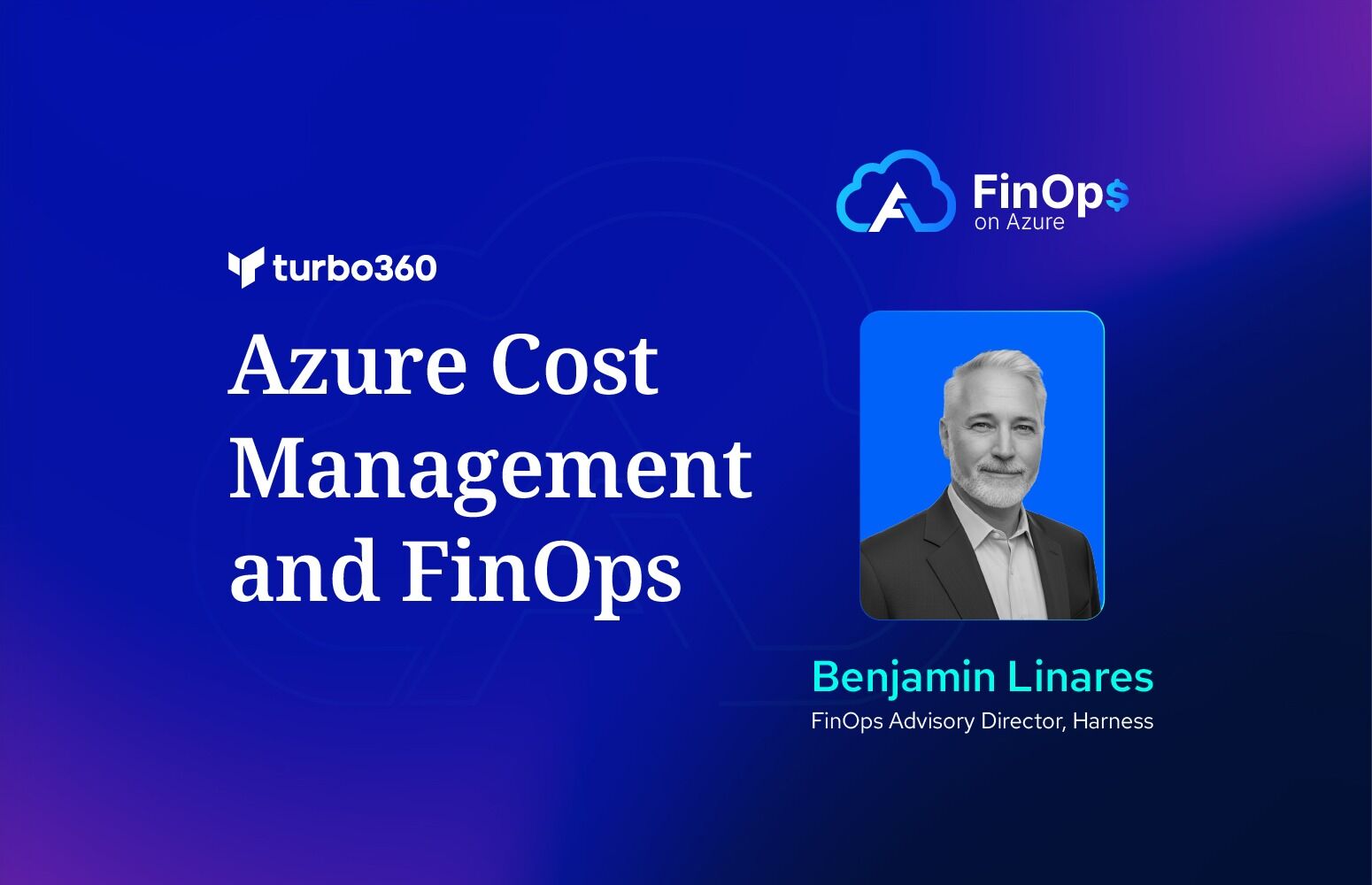
This reality is explored in a recent episode of the FinOps on Azure Podcast, where host Michael Stephenson speaks with Benjamin Linares about why cloud cost management becomes increasingly difficult as organizations scale.
Rather than focusing on optimization tactics or tooling features, the conversation looks at the broader reasons why large organizations struggle with cloud cost management, even when cost visibility exists.
Related reading : Cloud Cost Management for SaaS Companies on Azure
Cloud cost management challenges increase as organizations scale
One of the clearest themes in the discussion is that cloud cost management becomes more complex as organizations grow.
In large enterprises, cloud usage is distributed across multiple teams, business units, and cost centers. Engineering teams focus on reliability and delivery. Finance teams focus on budgets, forecasts, and financial accountability. Leadership expects cloud platforms to deliver agility while remaining predictable from a cost perspective.
When these groups are not aligned, cloud costs become difficult to explain and even harder to control. Decisions are made in silos, often without shared financial context.
From a finance standpoint, this results in recurring forecast variances and limited confidence in cost projections.
These cloud cost management challenges are not caused by lack of discipline. They are a byproduct of scale.
Visibility does not equal accountability
Many large organizations already have detailed cloud cost reports. However, visibility alone does not create accountability.
A recurring issue discussed in the podcast is ownership. Finance teams can see where money is being spent, but they often do not have the authority to influence the decisions driving that spend. Engineering teams control usage, but cost accountability is frequently centralized elsewhere.
This disconnect leaves finance teams reacting to cost increases after they occur rather than influencing decisions earlier in the lifecycle. Enterprise cloud cost management fails not because data is missing, but because responsibility is fragmented.
Without shared ownership, cloud financial management remains a reporting exercise rather than a decision-making framework.
Related reading : Cloud Cost Allocation: The Complete Guide for Modern FinOps Teams
FinOps for large organizations is a people challenge
Another important takeaway from the episode is that FinOps for large organizations is less about cost optimization and more about behavior.
Cloud cost management requires teams to change how they plan workloads, evaluate trade-offs, and measure success. This often requires finance teams to engage earlier and more frequently with technology teams, not just during budget cycles.
The conversation highlights how education and shared understanding play a critical role. When finance and engineering teams use different language to describe value, cost discussions stall. Over time, this leads to frustration and disengagement on both sides.
Learning from the broader FinOps community helped reinforce that these challenges are common across industries. Large organizations struggle not because they are inefficient, but because aligning people takes time.
Related reading : 26 Azure Cost Optimization Best Practices to Reduce Azure Cost
Why frameworks need to adapt to enterprise reality
While FinOps frameworks provide useful guidance, the episode makes it clear that large organizations rarely fit neatly into prescriptive models.
Existing governance structures, procurement processes, and financial controls all shape how cloud cost management works in practice. Attempting to implement FinOps without adapting it to enterprise realities often leads to stalled initiatives.
For finance leaders, progress comes from pragmatism. Incremental improvements, realistic expectations, and consistent communication matter more than chasing maturity scores. Enterprise cloud cost management improves when frameworks support the organization rather than constrain it.
Related reading : Cloud Cost Governance Frameworks
Leadership support determines success
Leadership support emerges as a decisive factor in the discussion.
When cloud cost management lacks executive sponsorship, finance teams struggle to influence behavior. Cost conversations remain reactive and tactical. When leadership is engaged, financial accountability becomes part of strategic planning.
The episode reinforces that sustainable cloud cost management is an operating model, not a one-time initiative. It requires trust, visibility, and support from senior leadership.
A realistic perspective for finance leaders
This episode provides a grounded explanation of why large organizations struggle with cloud cost management and why those struggles are normal.
For finance professionals working with Azure and other cloud platforms, the conversation offers reassurance. Progress does not start with cutting costs. It starts with understanding how decisions are made, how ownership is defined, and how finance can partner more closely with technology teams.


